
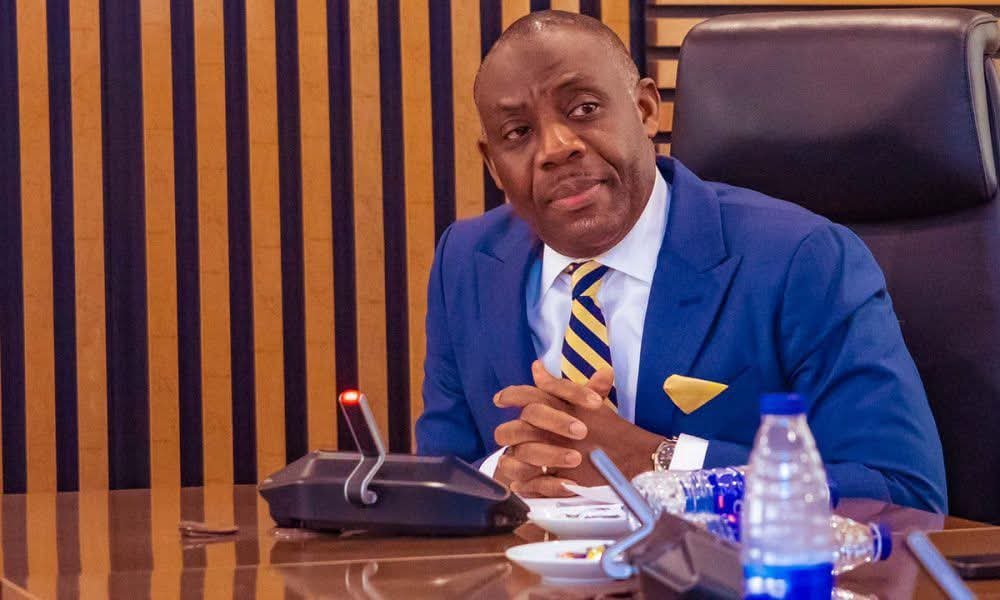
NECO questions allegedly sold for N3,000 before exams — Alausa recounts fight against malpractice
The Minister of Education, Tunji Alausa, has revealed how examination malpractice allegedly became so widespread that some National Examinations Council candidates could obtain examination questions for as little as N3,000 before sitting for their papers.
Alausa described the situation as one of the most troubling experiences in his fight to restore the credibility of Nigeria’s examination system, warning that widespread access to leaked questions could undermine the value of academic qualifications.
He spoke on Thursday in Abuja at a meeting with the National Association of Proprietors of Private Schools, where he called on parents, teachers, school proprietors, principals, invigilators and students to support efforts to curb examination malpractice.
According to the minister, examination cheating and question leakages had previously become so common that they were almost regarded as normal within parts of the education system.
“It’s sad. Before she and I came, the acceptance of examination malpractice, cheating and examination leakages in this country was mind-boggling, and the country accepted it. It was a nightmare,” he said.
Alausa recalled how some candidates allegedly used the name of former NECO Registrar, Professor Dantani Wushishi, to access a platform where examination questions were reportedly obtained before the scheduled papers.
“They bought his question for N3,000. That was it. Before the examination,” he said.
The minister said the problem persisted into the 2025 examination period, when the Minister of State for Education, Suwaiba Ahmad, repeatedly sent him questions allegedly obtained from students before they sat for their examinations.
He said the development kept him anxious as he had to verify the questions with examination officials to establish whether they were genuine.
“I would wake up to her text. She would send questions to me… She would say, ‘I just got this question.’
“It could be English or chemistry. I was always waking up with trepidation every morning,” Alausa recalled.
He said some of the questions were eventually confirmed to be the exact questions candidates were answering that day.
“I would send it to the HNO and ask, ‘HNO, is this correct?’ And the answer I got was, ‘Unfortunately, that’s the question we’re doing today,’” he said.
Malpractice goes beyond students
Alausa said the revelations showed that examination malpractice could no longer be viewed simply as students cheating to pass examinations.
He argued that the problem involved a wider ecosystem in which some parents, schools, teachers, principals and invigilators could facilitate access to examination materials.
“You might be in that isolated school, but the school system is also involved. In fact, I don’t blame the students that much. Any child can be bad,” he said.
“But when we have an ecosystem where parents, schools, teachers, invigilators and principals are in full connivance, the students are the smallest players.”
The minister’s concerns highlight the wider implications of examination malpractice for Nigeria’s education system.
When examination scores are obtained through leaked questions rather than genuine preparation, academic results can cease to reflect what students actually know. This can give unprepared candidates qualifications they have not earned while putting students who study honestly at a disadvantage.
It can also weaken confidence in Nigerian certificates and make it harder for universities, employers and other institutions to rely on examination results when assessing candidates.
FG moves to strengthen examination integrity
Alausa said the Federal Government would not allow the practice to continue, insisting that academic qualifications must be based on genuine learning, competence and merit.
“What are we doing? Desecrating the Nigerian system? It won’t happen. Not under the watch of this President,” he said.
He said stronger examination controls formed part of the broader education reforms of the President Bola Tinubu administration, aimed at improving standards, accountability and public confidence in the country’s assessment system.
The Minister of State for Education also urged private school proprietors and other stakeholders to support the reforms.
She explained that stricter examination controls could initially expose weaknesses among students who had become dependent on leaked questions to achieve high scores.
According to her, the introduction of serialised examination questions would make it more difficult for candidates to benefit from leaked materials and encourage them to prepare properly for their examinations.
She also urged schools to complete their curricula on time and encourage students to study consistently.
For the reforms to succeed, the ministers stressed that the responsibility cannot rest solely on examination bodies. Parents, schools, teachers, invigilators and students must all play their part in ensuring that examination results reflect genuine academic ability.
Ultimately, the government’s task is not only to prevent question papers from leaking but to restore confidence in an education system where certificates represent knowledge, competence and hard work rather than access to examination answers.