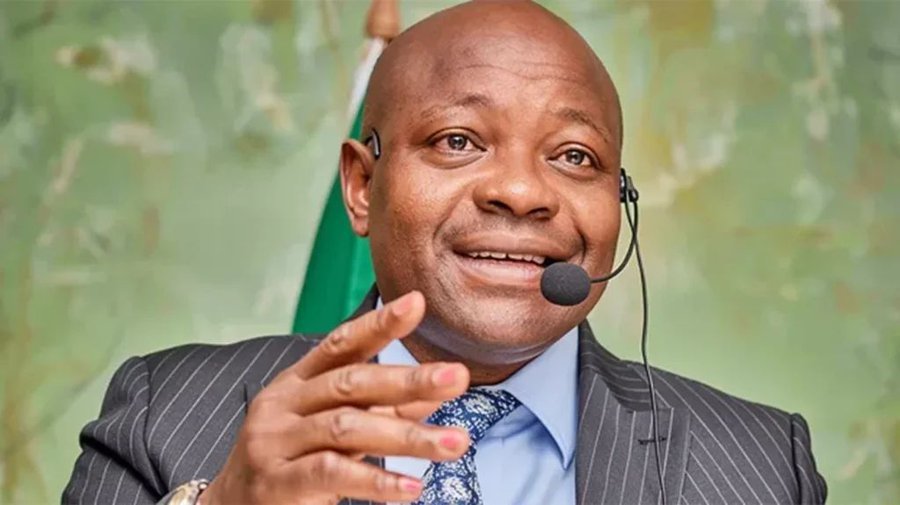
DSS DG Bans Operatives From Arresting People Over Civil Matters The Director-General of the Department of State Services (DSS), Oluwatosin Ajayi, has directed operatives of the intelligence agency not to arrest people over civil matters. Ajayi disclosed this in a recent media interview while explaining some of the reforms he has introduced since assuming office as the Director-General of the DSS. According to him, the agency has deliberately separated civil matters from criminal matters, stressing that the use of force should not be applied to disputes that are essentially civil in nature. The DSS boss said he had instructed his officers that “there should be no arrest on any civil case.” Instead, where disagreements arise in civil matters, the Service…
DSS DG Bans Operatives From Arresting People Over Civil Matters
TRENDING NEWS
-
 02 Nov 2026 SportsIwobi targets African Premier League appearance record after consistent rise through English football
-
 02 Nov 2026 EntertainmentFrancis Duru: Family announces burial plans for late Nollywood actor
-
 02 Nov 2026 Politics2027: Osun PBAT coordinator Larry Jay hails Adeleke, Oyetola, Basiru for backing Tinubu’s re-election bid
-
 02 Nov 2026 Latest NewsOdunlade Adekola celebrates wife on birthday, recalls how he proposed 22 years ago
-
 02 Nov 2026 HomeGN Trybe congratulates APC candidate Adekunle on merit award in Ilobu
-
 02 Nov 2026 HomeThree feared dead, five rescued as two-storey shopping complex collapses in Osun
-
 02 Nov 2026 HomeAdeleke orders PBAT campaign vehicles parked at Government House, awaits stakeholders’ decision
-
 02 Nov 2026 Latest NewsFootballer dies as trailer allegedly triggers multiple-vehicle crash on Lagos-Ibadan Expressway
-
 02 Nov 2026 HomeOsun Masterminds demand security reforms in Nigeria, call for state of emergency on deteriorating Osogbo township roads
-
 29 Oct 2026 Latest NewsUNIOSUN VC charges newly inducted medical laboratory scientists on patient safety, ethics
DSS DG Bans Operatives From Arresting People Over Civil Matters
DSS DG Bans Operatives From Arresting People Over Civil Matters
The Director-General of the Department of State Services (DSS), Oluwatosin Ajayi, has directed operatives of the intelligence agency not to arrest people over civil matters.
Ajayi disclosed this in a recent media interview while explaining some of the reforms he has introduced since assuming office as the Director-General of the DSS.
According to him, the agency has deliberately separated civil matters from criminal matters, stressing that the use of force should not be applied to disputes that are essentially civil in nature.
The DSS boss said he had instructed his officers that “there should be no arrest on any civil case.” Instead, where disagreements arise in civil matters, the Service should seek judicial interpretation or use other lawful channels to resolve the dispute.
Ajayi explained that one of the major changes under his leadership has been a clearer distinction between civil disputes and criminal offences.
He said his experience within the security system showed that the two had sometimes been conflated, resulting in situations where security measures were applied to matters that could have been handled through legal processes.
“You cannot apply the use of force in civil matters,” Ajayi said, according to reports of the interview.
The DSS Director-General added that even in some cases involving criminal allegations, arrest or the use of force may not necessarily be the first option.
He cited the controversy surrounding Professor Pat Utomi as an example, saying the Service opted to seek judicial interpretation instead of arresting him.
According to Ajayi, the court subsequently ruled on the legality and national-security implications of the matter.
The DSS boss said the approach demonstrated that security agencies could protect national interests without automatically resorting to arrest.
Ajayi was asked whether the DSS had now adopted court proceedings as its preferred method for dealing with civil disputes.
“Yes,” he replied, explaining that he had specifically instructed his personnel against making arrests in civil cases.
He also said the approach applied to interactions between the DSS and journalists.
According to him, when the Service has an issue with a journalist or media organisation, it should first explore professional channels, request corrections where necessary or approach the courts instead of making an arrest.
Ajayi described journalists as professional colleagues because, in his view, both journalists and intelligence officers have responsibilities involving information, although their audiences and functions differ.
While journalists inform the public, he said, intelligence officers provide information to government and handle classified information.
The DSS Director-General also highlighted his administration’s approach to disputes involving the media.
He said that where a media organisation publishes what the Service considers inaccurate information, the first response should be a request for correction or retraction.
Ajayi cited reports concerning an alleged DSS invasion of the Lagos State House of Assembly as an example.
According to him, the Service requested a retraction within seven days, and when the media organisations complied, the matter was not escalated.
He said this represented the appropriate civil approach to resolving disagreements.
The DSS chief further referenced a report by Order Paper alleging that the Service was involved in moves to impeach the Senate President.
Rather than arresting those involved, he said the agency clarified the facts and requested a retraction.
Ajayi maintained that where a disagreement cannot be resolved through such channels, the appropriate response is to seek redress through the courts.

We are a trusted news platform delivering breaking news, politics, business, technology, and global stories daily.
QUICK LINKS
- Politics
- Business
- Technology
- Sports
- Entertainment
- Health
©2026 FactsTrends. All Rights Reserved.